

Discover a Quicker Path to Your MSW
The Advanced Standing MSW program from King University offers qualified BSW graduates a streamlined path to a master’s degree. This fully online, CSWE-accredited program centers on Clinical Advocacy—equipping you to pinpoint community needs, address service gaps, and design practical solutions. You’ll build expertise in program development, resource coordination, and funding strategies, including grant writing and fundraising. You can graduate sooner while preparing to pursue licensure and step into professional clinical social work roles to drive lasting change.
Benefits of the Online Advanced Standing MSW Program:
- Complete the online MSW program with 33 credits and 600 hours of fieldwork
- Graduate from the Advanced Standing MSW program in just 12 months
- Can transfer up to 6 credit hours
- Learn from a faculty of social work experts
- CSWE accredited
Complete an online application
Online MSW Advanced Standing Curriculum
Experienced faculty with extensive clinical social work backgrounds guide you throughout the Advanced Standing MSW curriculum, offering practical insight and mentorship as you prepare for advanced practice.
The program includes 33 credit hours and 600 hours of supervised field education. Designed for completion in as little as 12 months, you may take up to 24 months to finish based on your pace and needs.
You’ll complete a CSWE-accredited curriculum covering areas such as clinical assessment and diagnosis, advocacy practice, trauma and addiction counseling, and strategies for helping underserved populations.
This course examines the nature and defining characteristics of the major forms of mental disorder that degrade individuals’ ability to achieve optimal levels of social functioning. It addresses the major diagnostic systems in use within the mental health and social work communities and prepares students in the use of these systems. The course addresses issues of ethics, diversity, oppression, and populations at risk.
Preq: SOWK 5002 HBSE I
This course provides conceptual frameworks for understanding the role and role strains of professional social workers in organizational settings
and expands students’ capacities to maximize their practice effectiveness in and through organizations, provide organizational leadership, contribute to constructive organizational change and professionally survive the rigors of organizational processes and politics. The course examines organizational goals, structures, environments, and processes that impact service strategies, case decisions, and the achievement of professional objectives, including grant writing and program evaluation.
Preq: SOWK 5003 or Advanced Standing
This course examines the social and human service environments of geographical areas in the United States that are recognized as underserved and under-resourced with respect to social welfare service delivery. Beyond the exploration of salient social, political and economic dynamics, it also emphasizes knowledge and skill development for professional social work practice in such areas. The course provides a close examination of various models of case management approaches appropriate for the practice of social work as well as models for client-centered advocacy with attention paid to the various roles case management demands (e.g., broker, advocate, educator, counselor, care giver, etc.). This course focuses on working with clients and care givers in building and strengthening social networks with special attention to congregations and religiously affiliated organizations as potential agents of community change.
Preq: SOWK 5005 Practice II and SOWK 5006 Practice III or Advanced Standing
This course builds on the values, knowledge and skills of the generalist practice model while emphasizing the application of additional knowledge and skills toward the end of affecting the ways clients process thoughts, feelings and ultimately behavior. The focus is on micro-level assessment and intervention skills for clinical (mental health) practice. Students are expected to develop a sophisticated bio-psycho-social-spiritual framework for assessment and intervention within the context of ethical practice principles. Students are expected to develop the knowledge and skills necessary to understand the key concepts and terms used in cognitive and behavioral treatment (CBT), conduct cognitive and behavioral assessments to identify treatment goals, plan and implement cognitive and behavioral interventions, and evaluate the effectiveness of CBT outcomes toward the goal of using grounded evidence to guide practice decisions.
Preq: SOWK 5005 Practice II and SOWK 5009 Psychopathology & Assessment or Advanced Standing
This course prepares social workers with knowledge and skills for advanced practice, exploring the relationship between trauma and substance-use related problems. The course covers principles, instruments, and practice skills in evidence-informed assessment and diagnosis, treatment planning and implementation, intervention, relapse prevention, and legal/ethical issues related to intervening around trauma and substance use problems. Students are expected to learn the etiology and effects of psychological and emotional traumatization, as well as the pharmacological mechanisms of dependence, components of addiction related behavioral change, and issues involved in prevention, intervention, and evaluation of substance use and addiction. The course also examines the impact of age, race, gender, social class, culture, ethnicity, spirituality, religions, sexual orientation, national origin, and physical and mental ability on trauma patterns of addiction. The course also addresses the values and professional ethics relating to those experiencing trauma and addictions issues as well as to professional practitioners engaged with them.
Prerequisite: SOWK 5005 and 5009 or Advanced Standing
This course provides for supervised social work practice emphasizing the application of recognized clinical interventions as a secondary if not primary intervention modality. The course provides students with opportunities to integrate knowledge and understanding of theories of human behavior, psychopathology, strength, and diversity in clinical practice with individuals with an emphasis on ethical decision making. Client-centered advocacy as expressed by brokering, referral, direct provision of helping services, and activities directed toward the development of new helping resources is expected. In order to promote the real-time integration of knowledge and skills, students are required to take SOWK 5015 concurrently with SOWK 5013 Practice with Individuals.
Preq: Field Director’s Approval
This course emphasizes and provides knowledge and skill development for advanced interpersonal interventions with individuals within the context of families and family dynamics. It focuses on skills for (1) developing therapeutic alliances; (2) conducting theory-informed assessments; (3) developing mutually agreed upon intervention plans; (4) conducting evidence-based and theory-informed interventions; and (5) evaluating the individual’s and/or family’s progress and intervention effectiveness. It provides frameworks and skill development for individual and family-wide interventions by emphasizing multimodal integrated approaches to working with individuals in family contexts (e.g., Behavioral and Cognitive-Behavioral Family Therapy, Solution-Focused Family Therapy and Network Therapy) with diverse clientele experiencing crises for whom a variety of formal and informal helping networks are potentially available.
Preq: SOWK 5013 Practice with Individuals
This course provides for supervised social work practice emphasizing the application of recognized clinical interventions as a secondary if not primary intervention modality. The focus in this course is on intervention with individuals in the context of family dynamics as well as intervention at the family level itself, the organizational context of practice, and the development of programming to improve the levels of social functioning of agency clients or others experiencing significantly impaired social functioning. Students are expected to interpret linkages between the content and experience of this course with all other courses taken as part of the King University MSW curriculum.
Preq: SOWK 5015 Advanced Practice Field I
This course focuses on instructing students in the logic and methods of Motivational Interviewing (MI), a client-centered, yet directive method for enhancing intrinsic motivation for change. Research has shown that MI can be adapted to engage clients in change processes for a wide variety of resistant behaviors as well as a general intervention/interviewing approach applicable to a wide variety of client interactions. Not repeatable for credit for students having earned credit for SOWK 5004 Practice I.
Preq: Advanced Standing
This course explores the integration of Christian faith and social work practice within church settings among faith-based social service agencies, and with service users who identify with the Christian faith. Students will develop a comprehensive understanding of the unique challenges inherent to this specialized field, as well as opportunities afforded to social work practitioners. There is a particular focus on supporting ministry staff, lay leaders, and church communities through capacity building and consciousness raising. The concept of church hurts will be discussed, as well as a number of pertinent social issues that intersect with the life of a congregation. The course also examines the ethical dilemmas faced by Christ-following social workers and gives students an opportunity to apply these concepts within Christian congregations and faith-based professional practice settings.
Students must enroll in SOWK 5990 during their final semester of MSW coursework. This course consists of an online, one attempt comprehensive examination. Students must pass the MSW comprehensive examination with a minimum score of 80% and is a necessary prerequisite for graduation from the MSW program. This exam is comprised of 100 items comprehensively measuring the students’ learning and retention of the Social Work subject matter and adherence to the National Association of Social Workers Code of Ethics.
Prerequisite: Must be enrolled in final semester of coursework
This course offers an orientation to social work practice in schools. Students will learn about various approaches to the social work role in schools and school social work practices. The course will provide an overview of ecological systems in schools, critical policy issues impacting education, and relevant prevention and intervention strategies to promote the right to education for all (including children and youth with mental, physical, and emotional disabilities, economic and geographical disadvantages, and diverse ethnic and linguistic backgrounds).
This course emphasizes and provides knowledge and skill development for advanced interpersonal interventions with couples and families. Knowledge of family dynamics, advocacy for couples and families and clinical interventions are reviewed. This course creates opportunities for skill development in the following areas: (1) developing therapeutic alliances; (2) conducting theory-informed assessments; (3) developing mutually agreed upon intervention plans; (4) conducting evidence based and theory informed interventions; and (5) evaluating couples’ and family’s progress and intervention effectiveness. It provides frameworks and skill development for family-wide interventions by emphasizing multimodal integrated approaches to working with individuals in family contexts (e.g., Behavioral and Cognitive-Behavioral Family Therapy, Solution-Focused Family Therapy and Network Therapy) with diverse clientele experiencing crises for whom a variety of formal and informal helping networks are potentially available.
Admission Requirements
Students applying for our Master of Social Work degree must have:
- A COMPLETE ONLINE APPLICATION
- A bachelor’s degree from a nationally accredited college or university with a minimum cumulative GPA of 3.0 on a 4.0 scale
- Students with a lower GPA may be considered and accepted on a conditional basis
- A bachelor’s degree from a nationally accredited college or university with a minimum cumulative GPA of 3.0 on a 4.0 scale
- Official transcripts from all institutions attended
- Two letters of recommendation
- Personal statement
- Submit a professional resume or CV
- Complete a one-on-one interview with MSW faculty
To qualify for the Advanced Standing program, you must have the requirements above as well as:
- A BSW degree within the past 5 years from a CSWE-accredited program*
- A copy of your final field evaluation that demonstrates excellence in the field
*If you earned a BSW from a CSWE-accredited institution more than 5 years ago but have been working in the field, you are still encouraged to apply to the Advanced Standing program.
There are multiple pathways to admission for the Advanced Standing MSW program.
Guaranteed Admission:
If you are a current BSW student at King, you may qualify for guaranteed admission to the MSW – Advanced Standing program if you meet the following requirements:
- Submit an ONLINE APPLICATION by November 1 for an early decision
- Maintain a GPA of 3.0 or higher while in the King BSW program
- Submit recommendations from:
- BSW Program Coordinator
- Field Education Director
- Complete a one-on-one interview with MSW faculty
Preferred Admission:
If you’re a King BSW alum, even if you completed your BSW more than five years ago*, you may qualify for preferred admission to the MSW – Advanced Standing program if you meet the following requirements:
- Submit an ONLINE APPLICATION
- Have earned a BSW from King University with a minimum cumulative GPA of 3.0 on a 4.0 scale
- Students with a lower GPA may be considered and accepted on a conditional basis
- Submit two recommendations
- One from a King University faculty member
- One from a work supervisor
- Complete a one-on-one interview with MSW faculty
- Submit a professional resume or CV
*If you earned a BSW from King University more than five years ago, but have been working in the field, you are still encouraged to apply to the Advanced Standing program.
King University’s Master of Social Work program is accredited by the Council on Social Work Education’s (CSWE) Board of Accreditation (BOA).
Accreditation of a baccalaureate or master’s social work program by the BOA indicates that it meets or exceeds standards of program quality evaluated through a peer review accreditation process. An accredited program has sufficient resources to meet its mission and goals and the BOA has verified that it demonstrates compliance with all sections of the Educational Policy and Accreditation Standards (EPAS).
Accreditation applies to all program options, which includes locations and delivery methods.
Accreditation provides reasonable assurance about the quality of the program and the competence of students graduating from the program.
Meet the MSW Program Director
Dr. Clifford Rosenbohm, our MSW program director, is also a commissioner on the executive committee of the Commission on Accreditation, Council of Social Work Education (CSWE) and serves on the Social Work Professional Accreditation Council of the Council of Christian Colleges & Universities (CCCU). He developed the program to align with the strict guidelines of CSWE accreditation.
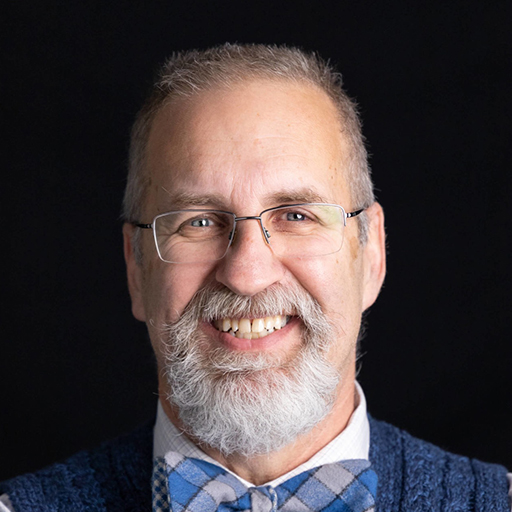
Professor of Social Work, Chair, Department of Social Work
Dr. Rosenbohm has been at King since 2020 and appreciates its commitment to the integration of faith and learning. “As my career started to take a different path, I found my way into higher education and learned that I enjoyed engaging with college students about a topic that I had a passion for.”